•  
Rice Production in Indonesia - Bali

Rice Production in Indonesia - Bali

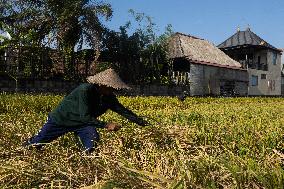
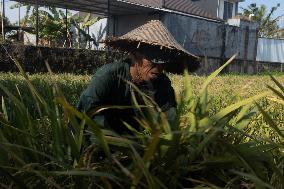
A worker uses a traditional billhook to harvest ripened rice stalks in a field in Denpasar, Bali, Indonesia on September 13, 2023. Manual harvesting methods remain common among small-scale farmers, as rice continues to serve as the staple food for more than half of the world’s population. Photo by Nicola Longobardi/Middle East Images/ABACAPRESS.COm

  •  
Rice Production in Indonesia - Bali

Rice Production in Indonesia - Bali

A worker uses a traditional billhook to harvest ripened rice stalks in a field in Denpasar, Bali, Indonesia on September 13, 2023. Manual harvesting methods remain common among small-scale farmers, as rice continues to serve as the staple food for more than half of the world’s population. Photo by Nicola Longobardi/Middle East Images/ABACAPRESS.COm

  •  
Peanut Seller Returns To Ariha - Syria

Peanut Seller Returns To Ariha - Syria

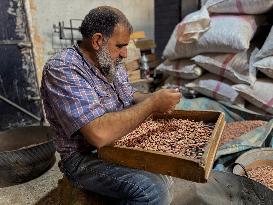
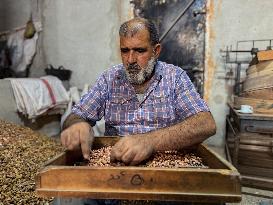
Uncle Abu Omar sorts peanuts inside a small workshop in Ariha, Syria, on November 12, 2025. The peanuts form part of the local supply processed through traditional hand-cracking methods practiced in the town’s market, including those performed by Abu Omar. Photo by Omar Albaw/Middle East Images/ABACAPRESS.COM

  •  
Peanut Seller Returns To Ariha - Syria

Peanut Seller Returns To Ariha - Syria

Uncle Abu Omar sorts peanuts inside a small workshop in Ariha, Syria, on November 12, 2025. The peanuts form part of the local supply processed through traditional hand-cracking methods practiced in the town’s market, including those performed by Abu Omar. Photo by Omar Albaw/Middle East Images/ABACAPRESS.COM

  •  
Peanut Seller Returns To Ariha - Syria

Peanut Seller Returns To Ariha - Syria

Uncle Abu Omar sorts peanuts inside a small workshop in Ariha, Syria, on November 12, 2025. The peanuts form part of the local supply processed through traditional hand-cracking methods practiced in the town’s market, including those performed by Abu Omar. Photo by Omar Albaw/Middle East Images/ABACAPRESS.COM

  •  
Peanut Seller Returns To Ariha - Syria

Peanut Seller Returns To Ariha - Syria

Uncle Abu Omar sorts peanuts inside a small workshop in Ariha, Syria, on November 12, 2025. The peanuts form part of the local supply processed through traditional hand-cracking methods practiced in the town’s market, including those performed by Abu Omar. Photo by Omar Albaw/Middle East Images/ABACAPRESS.COM

  •  
Peanut Seller Returns To Ariha - Syria

Peanut Seller Returns To Ariha - Syria

Uncle Abu Omar sorts peanuts inside a small workshop in Ariha, Syria, on November 12, 2025. The peanuts form part of the local supply processed through traditional hand-cracking methods practiced in the town’s market, including those performed by Abu Omar. Photo by Omar Albaw/Middle East Images/ABACAPRESS.COM

  •  
Peanut Seller Returns To Ariha - Syria

Peanut Seller Returns To Ariha - Syria

Uncle Abu Omar sorts peanuts inside a small workshop in Ariha, Syria, on November 12, 2025. The peanuts form part of the local supply processed through traditional hand-cracking methods practiced in the town’s market, including those performed by Abu Omar. Photo by Omar Albaw/Middle East Images/ABACAPRESS.COM

  •  
Peanut Seller Returns To Ariha - Syria

Peanut Seller Returns To Ariha - Syria

Uncle Abu Omar sorts peanuts inside a small workshop in Ariha, Syria, on November 12, 2025. The peanuts form part of the local supply processed through traditional hand-cracking methods practiced in the town’s market, including those performed by Abu Omar. Photo by Omar Albaw/Middle East Images/ABACAPRESS.COM

  •  
Peanut Seller Returns To Ariha - Syria

Peanut Seller Returns To Ariha - Syria

Uncle Abu Omar sorts peanuts inside a small workshop in Ariha, Syria, on November 12, 2025. The peanuts form part of the local supply processed through traditional hand-cracking methods practiced in the town’s market, including those performed by Abu Omar. Photo by Omar Albaw/Middle East Images/ABACAPRESS.COM

  •  
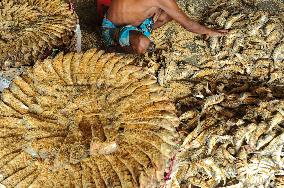
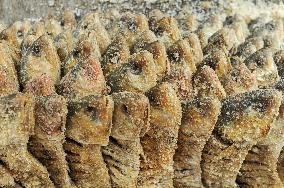
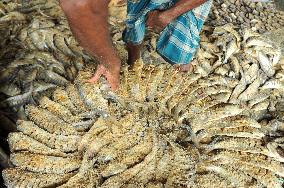
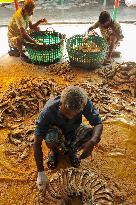
Traditional Salted Hilsa Processing In Chattogram - Bangladesh

Traditional Salted Hilsa Processing In Chattogram - Bangladesh

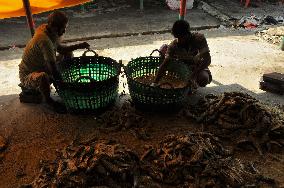
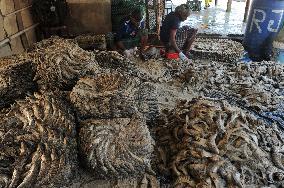
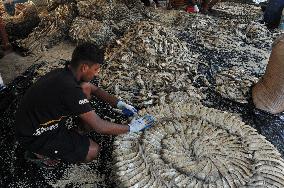
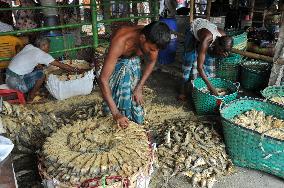
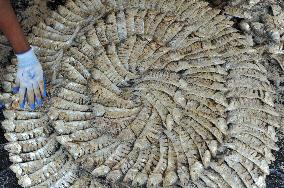
Workers processing salted Hilsa fish, known as “Nona Ilish,” using traditional methods at a coastal area in Chattogram. The delicacy holds deep economic, cultural, and traditional importance across Bangladesh and the wider coastal South Asian region. On 26 October 2025 Chittagong Bangladesh Photo by Md Rafayat Haque Khan/ Eyepix Group/ABACAPRESS.COM

  •  
Traditional Salted Hilsa Processing In Chattogram - Bangladesh

Traditional Salted Hilsa Processing In Chattogram - Bangladesh

Workers processing salted Hilsa fish, known as “Nona Ilish,” using traditional methods at a coastal area in Chattogram. The delicacy holds deep economic, cultural, and traditional importance across Bangladesh and the wider coastal South Asian region. On 26 October 2025 Chittagong Bangladesh Photo by Md Rafayat Haque Khan/ Eyepix Group/ABACAPRESS.COM

  •  
Traditional Salted Hilsa Processing In Chattogram - Bangladesh

Traditional Salted Hilsa Processing In Chattogram - Bangladesh

Workers processing salted Hilsa fish, known as “Nona Ilish,” using traditional methods at a coastal area in Chattogram. The delicacy holds deep economic, cultural, and traditional importance across Bangladesh and the wider coastal South Asian region. On 26 October 2025 Chittagong Bangladesh Photo by Md Rafayat Haque Khan/ Eyepix Group/ABACAPRESS.COM

  •  
Traditional Salted Hilsa Processing In Chattogram - Bangladesh

Traditional Salted Hilsa Processing In Chattogram - Bangladesh

Workers processing salted Hilsa fish, known as “Nona Ilish,” using traditional methods at a coastal area in Chattogram. The delicacy holds deep economic, cultural, and traditional importance across Bangladesh and the wider coastal South Asian region. On 26 October 2025 Chittagong Bangladesh Photo by Md Rafayat Haque Khan/ Eyepix Group/ABACAPRESS.COM

  •  
Traditional Salted Hilsa Processing In Chattogram - Bangladesh

Traditional Salted Hilsa Processing In Chattogram - Bangladesh

Workers processing salted Hilsa fish, known as “Nona Ilish,” using traditional methods at a coastal area in Chattogram. The delicacy holds deep economic, cultural, and traditional importance across Bangladesh and the wider coastal South Asian region. On 26 October 2025 Chittagong Bangladesh Photo by Md Rafayat Haque Khan/ Eyepix Group/ABACAPRESS.COM

  •  
Traditional Salted Hilsa Processing In Chattogram - Bangladesh

Traditional Salted Hilsa Processing In Chattogram - Bangladesh

Workers processing salted Hilsa fish, known as “Nona Ilish,” using traditional methods at a coastal area in Chattogram. The delicacy holds deep economic, cultural, and traditional importance across Bangladesh and the wider coastal South Asian region. On 26 October 2025 Chittagong Bangladesh Photo by Md Rafayat Haque Khan/ Eyepix Group/ABACAPRESS.COM

  •  
Traditional Salted Hilsa Processing In Chattogram - Bangladesh

Traditional Salted Hilsa Processing In Chattogram - Bangladesh

Workers processing salted Hilsa fish, known as “Nona Ilish,” using traditional methods at a coastal area in Chattogram. The delicacy holds deep economic, cultural, and traditional importance across Bangladesh and the wider coastal South Asian region. On 26 October 2025 Chittagong Bangladesh Photo by Md Rafayat Haque Khan/ Eyepix Group/ABACAPRESS.COM

  •  
Traditional Salted Hilsa Processing In Chattogram - Bangladesh

Traditional Salted Hilsa Processing In Chattogram - Bangladesh

Workers processing salted Hilsa fish, known as “Nona Ilish,” using traditional methods at a coastal area in Chattogram. The delicacy holds deep economic, cultural, and traditional importance across Bangladesh and the wider coastal South Asian region. On 26 October 2025 Chittagong Bangladesh Photo by Md Rafayat Haque Khan/ Eyepix Group/ABACAPRESS.COM

  •  
Traditional Salted Hilsa Processing In Chattogram - Bangladesh

Traditional Salted Hilsa Processing In Chattogram - Bangladesh

Workers processing salted Hilsa fish, known as “Nona Ilish,” using traditional methods at a coastal area in Chattogram. The delicacy holds deep economic, cultural, and traditional importance across Bangladesh and the wider coastal South Asian region. On 26 October 2025 Chittagong Bangladesh Photo by Md Rafayat Haque Khan/ Eyepix Group/ABACAPRESS.COM

  •  
Traditional Salted Hilsa Processing In Chattogram - Bangladesh

Traditional Salted Hilsa Processing In Chattogram - Bangladesh

Workers processing salted Hilsa fish, known as “Nona Ilish,” using traditional methods at a coastal area in Chattogram. The delicacy holds deep economic, cultural, and traditional importance across Bangladesh and the wider coastal South Asian region. On 26 October 2025 Chittagong Bangladesh Photo by Md Rafayat Haque Khan/ Eyepix Group/ABACAPRESS.COM

  •  
Sake Making At Jozan Brewery In Fukui - Japan

Sake Making At Jozan Brewery In Fukui - Japan

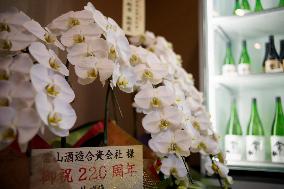
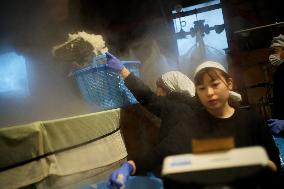
A flower basket marking the 220th anniversary of the establishment at Jozan Brewery in Fukui. Japanese alcoholic beverages, including sake (nihonshu), shochu and awamori, are made from grains and water. Craftspeople use koji mold to convert the starch in the ingredients into sugar, and oversee the process to make sure the mold grows in optimal conditions. Jozan, a brewery located in Fukui Prefecture, a region renowned for its high-quality rice, has upheld traditional sake-making for over 220 years. Led by Shinpei Tokoyama, the brewery exemplifies its ongoing efforts in coping with challenges in modern era while preserving traditional craftsmanship. With modern techniques, Jozan has realized a meticulous control over the brewing process, ensuring the consistency of product quality without compromising the essence of traditional making methods. In 2017, Jozan also renovated its brewing space, combining functionality with modern design to accommodate both production needs and visitors from around the world. The

  •  
Sake Making At Jozan Brewery In Fukui - Japan

Sake Making At Jozan Brewery In Fukui - Japan

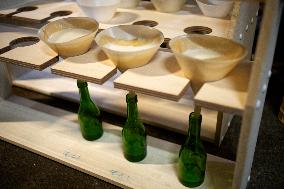
Samples of fresh sake are pictured at Jozan Brewery in Fukui. Japanese alcoholic beverages, including sake (nihonshu), shochu and awamori, are made from grains and water. Craftspeople use koji mold to convert the starch in the ingredients into sugar, and oversee the process to make sure the mold grows in optimal conditions. Jozan, a brewery located in Fukui Prefecture, a region renowned for its high-quality rice, has upheld traditional sake-making for over 220 years. Led by Shinpei Tokoyama, the brewery exemplifies its ongoing efforts in coping with challenges in modern era while preserving traditional craftsmanship. With modern techniques, Jozan has realized a meticulous control over the brewing process, ensuring the consistency of product quality without compromising the essence of traditional making methods. In 2017, Jozan also renovated its brewing space, combining functionality with modern design to accommodate both production needs and visitors from around the world. The United Nations Educational, Scie

  •  
Sake Making At Jozan Brewery In Fukui - Japan

Sake Making At Jozan Brewery In Fukui - Japan

Trademarks of Jozan Brewery are pictured at the reception area of the brewery in Fukui. Japanese alcoholic beverages, including sake (nihonshu), shochu and awamori, are made from grains and water. Craftspeople use koji mold to convert the starch in the ingredients into sugar, and oversee the process to make sure the mold grows in optimal conditions. Jozan, a brewery located in Fukui Prefecture, a region renowned for its high-quality rice, has upheld traditional sake-making for over 220 years. Led by Shinpei Tokoyama, the brewery exemplifies its ongoing efforts in coping with challenges in modern era while preserving traditional craftsmanship. With modern techniques, Jozan has realized a meticulous control over the brewing process, ensuring the consistency of product quality without compromising the essence of traditional making methods. In 2017, Jozan also renovated its brewing space, combining functionality with modern design to accommodate both production needs and visitors from around the world. The United

  •  
Sake Making At Jozan Brewery In Fukui - Japan

Sake Making At Jozan Brewery In Fukui - Japan

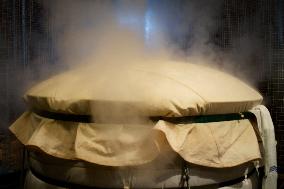
Cleaned rice is steamed at Jozan Brewery in Fukui. Japanese alcoholic beverages, including sake (nihonshu), shochu and awamori, are made from grains and water. Craftspeople use koji mold to convert the starch in the ingredients into sugar, and oversee the process to make sure the mold grows in optimal conditions. Jozan, a brewery located in Fukui Prefecture, a region renowned for its high-quality rice, has upheld traditional sake-making for over 220 years. Led by Shinpei Tokoyama, the brewery exemplifies its ongoing efforts in coping with challenges in modern era while preserving traditional craftsmanship. With modern techniques, Jozan has realized a meticulous control over the brewing process, ensuring the consistency of product quality without compromising the essence of traditional making methods. In 2017, Jozan also renovated its brewing space, combining functionality with modern design to accommodate both production needs and visitors from around the world. The United Nations Educational, Scientific and

  •  
Sake Making At Jozan Brewery In Fukui - Japan

Sake Making At Jozan Brewery In Fukui - Japan

Shinpei Tokoyama waits for moromi to flow into the filter at Jozan Brewery in Fukui. Japanese alcoholic beverages, including sake (nihonshu), shochu and awamori, are made from grains and water. Craftspeople use koji mold to convert the starch in the ingredients into sugar, and oversee the process to make sure the mold grows in optimal conditions. Jozan, a brewery located in Fukui Prefecture, a region renowned for its high-quality rice, has upheld traditional sake-making for over 220 years. Led by Shinpei Tokoyama, the brewery exemplifies its ongoing efforts in coping with challenges in modern era while preserving traditional craftsmanship. With modern techniques, Jozan has realized a meticulous control over the brewing process, ensuring the consistency of product quality without compromising the essence of traditional making methods. In 2017, Jozan also renovated its brewing space, combining functionality with modern design to accommodate both production needs and visitors from around the world. The United Na

  •  
Sake Making At Jozan Brewery In Fukui - Japan

Sake Making At Jozan Brewery In Fukui - Japan

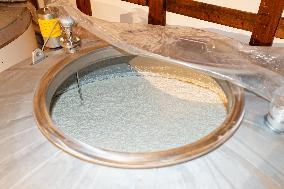
Fermenting moromi is pictured at Jozan Brewery in Fukui. Japanese alcoholic beverages, including sake (nihonshu), shochu and awamori, are made from grains and water. Craftspeople use koji mold to convert the starch in the ingredients into sugar, and oversee the process to make sure the mold grows in optimal conditions. Jozan, a brewery located in Fukui Prefecture, a region renowned for its high-quality rice, has upheld traditional sake-making for over 220 years. Led by Shinpei Tokoyama, the brewery exemplifies its ongoing efforts in coping with challenges in modern era while preserving traditional craftsmanship. With modern techniques, Jozan has realized a meticulous control over the brewing process, ensuring the consistency of product quality without compromising the essence of traditional making methods. In 2017, Jozan also renovated its brewing space, combining functionality with modern design to accommodate both production needs and visitors from around the world. The United Nations Educational, Scientifi

  •  
Sake Making At Jozan Brewery In Fukui - Japan

Sake Making At Jozan Brewery In Fukui - Japan

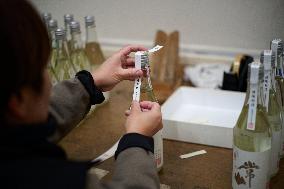
A worker seals a bottle of sake at Jozan Brewery in Fukui. Japanese alcoholic beverages, including sake (nihonshu), shochu and awamori, are made from grains and water. Craftspeople use koji mold to convert the starch in the ingredients into sugar, and oversee the process to make sure the mold grows in optimal conditions. Jozan, a brewery located in Fukui Prefecture, a region renowned for its high-quality rice, has upheld traditional sake-making for over 220 years. Led by Shinpei Tokoyama, the brewery exemplifies its ongoing efforts in coping with challenges in modern era while preserving traditional craftsmanship. With modern techniques, Jozan has realized a meticulous control over the brewing process, ensuring the consistency of product quality without compromising the essence of traditional making methods. In 2017, Jozan also renovated its brewing space, combining functionality with modern design to accommodate both production needs and visitors from around the world. The United Nations Educational, Scienti

  •  
Sake Making At Jozan Brewery In Fukui - Japan

Sake Making At Jozan Brewery In Fukui - Japan

A worker examines samples of fresh sake at Jozan Brewery in Fukui. Japanese alcoholic beverages, including sake (nihonshu), shochu and awamori, are made from grains and water. Craftspeople use koji mold to convert the starch in the ingredients into sugar, and oversee the process to make sure the mold grows in optimal conditions. Jozan, a brewery located in Fukui Prefecture, a region renowned for its high-quality rice, has upheld traditional sake-making for over 220 years. Led by Shinpei Tokoyama, the brewery exemplifies its ongoing efforts in coping with challenges in modern era while preserving traditional craftsmanship. With modern techniques, Jozan has realized a meticulous control over the brewing process, ensuring the consistency of product quality without compromising the essence of traditional making methods. In 2017, Jozan also renovated its brewing space, combining functionality with modern design to accommodate both production needs and visitors from around the world. The United Nations Educational,

  •  
Sake Making At Jozan Brewery In Fukui - Japan

Sake Making At Jozan Brewery In Fukui - Japan

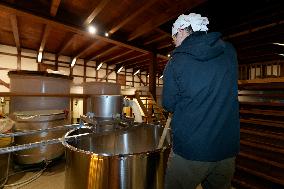
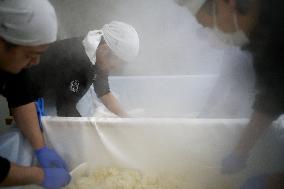
A worker stirs the mixture of steamed rice, koji, water and Shubo at Jozan Brewery in Fukui. Japanese alcoholic beverages, including sake (nihonshu), shochu and awamori, are made from grains and water. Craftspeople use koji mold to convert the starch in the ingredients into sugar, and oversee the process to make sure the mold grows in optimal conditions. Jozan, a brewery located in Fukui Prefecture, a region renowned for its high-quality rice, has upheld traditional sake-making for over 220 years. Led by Shinpei Tokoyama, the brewery exemplifies its ongoing efforts in coping with challenges in modern era while preserving traditional craftsmanship. With modern techniques, Jozan has realized a meticulous control over the brewing process, ensuring the consistency of product quality without compromising the essence of traditional making methods. In 2017, Jozan also renovated its brewing space, combining functionality with modern design to accommodate both production needs and visitors from around the world. The U

  •  
Sake Making At Jozan Brewery In Fukui - Japan

Sake Making At Jozan Brewery In Fukui - Japan

Bags of locally produced rice, a raw material for sake-making, is seen at Jozan Brewery in Fukui. Japanese alcoholic beverages, including sake (nihonshu), shochu and awamori, are made from grains and water. Craftspeople use koji mold to convert the starch in the ingredients into sugar, and oversee the process to make sure the mold grows in optimal conditions. Jozan, a brewery located in Fukui Prefecture, a region renowned for its high-quality rice, has upheld traditional sake-making for over 220 years. Led by Shinpei Tokoyama, the brewery exemplifies its ongoing efforts in coping with challenges in modern era while preserving traditional craftsmanship. With modern techniques, Jozan has realized a meticulous control over the brewing process, ensuring the consistency of product quality without compromising the essence of traditional making methods. In 2017, Jozan also renovated its brewing space, combining functionality with modern design to accommodate both production needs and visitors from around the world.

  •  
Sake Making At Jozan Brewery In Fukui - Japan

Sake Making At Jozan Brewery In Fukui - Japan

Workers weigh steamed rice at Jozan Brewery in Fukui. Japanese alcoholic beverages, including sake (nihonshu), shochu and awamori, are made from grains and water. Craftspeople use koji mold to convert the starch in the ingredients into sugar, and oversee the process to make sure the mold grows in optimal conditions. Jozan, a brewery located in Fukui Prefecture, a region renowned for its high-quality rice, has upheld traditional sake-making for over 220 years. Led by Shinpei Tokoyama, the brewery exemplifies its ongoing efforts in coping with challenges in modern era while preserving traditional craftsmanship. With modern techniques, Jozan has realized a meticulous control over the brewing process, ensuring the consistency of product quality without compromising the essence of traditional making methods. In 2017, Jozan also renovated its brewing space, combining functionality with modern design to accommodate both production needs and visitors from around the world. The United Nations Educational, Scientific a

  •  
Sake Making At Jozan Brewery In Fukui - Japan

Sake Making At Jozan Brewery In Fukui - Japan

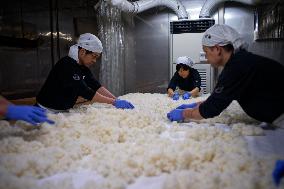
Shinpei Tokoyama (L) and workers spread steamed rice mixed with koji mold at Jozan Brewery in Fukui. Japanese alcoholic beverages, including sake (nihonshu), shochu and awamori, are made from grains and water. Craftspeople use koji mold to convert the starch in the ingredients into sugar, and oversee the process to make sure the mold grows in optimal conditions. Jozan, a brewery located in Fukui Prefecture, a region renowned for its high-quality rice, has upheld traditional sake-making for over 220 years. Led by Shinpei Tokoyama, the brewery exemplifies its ongoing efforts in coping with challenges in modern era while preserving traditional craftsmanship. With modern techniques, Jozan has realized a meticulous control over the brewing process, ensuring the consistency of product quality without compromising the essence of traditional making methods. In 2017, Jozan also renovated its brewing space, combining functionality with modern design to accommodate both production needs and visitors from around the worl

  •  
Sake Making At Jozan Brewery In Fukui - Japan

Sake Making At Jozan Brewery In Fukui - Japan

Shinpei Tokoyama (2nd L) and workers spread koji mold over steamed rice at Jozan Brewery in Fukui. Japanese alcoholic beverages, including sake (nihonshu), shochu and awamori, are made from grains and water. Craftspeople use koji mold to convert the starch in the ingredients into sugar, and oversee the process to make sure the mold grows in optimal conditions. Jozan, a brewery located in Fukui Prefecture, a region renowned for its high-quality rice, has upheld traditional sake-making for over 220 years. Led by Shinpei Tokoyama, the brewery exemplifies its ongoing efforts in coping with challenges in modern era while preserving traditional craftsmanship. With modern techniques, Jozan has realized a meticulous control over the brewing process, ensuring the consistency of product quality without compromising the essence of traditional making methods. In 2017, Jozan also renovated its brewing space, combining functionality with modern design to accommodate both production needs and visitors from around the world.

  •  
CHINA-GUANGXI-LIUZHOU-PICKLED BAMBOO SHOOTS-YOUNG ENTREPRENEUR (CN)

CHINA-GUANGXI-LIUZHOU-PICKLED BAMBOO SHOOTS-YOUNG ENTREPRENEUR (CN)

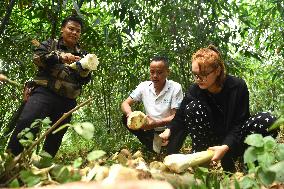
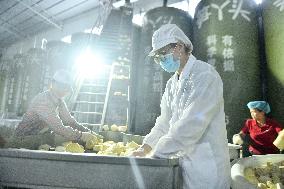
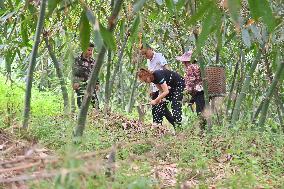
(240725) -- LIUZHOU, July 25, 2024 Photo by Xinhua/ABACAPRESS.COM) -- Yan Qianqian (1st, R) and her father Yan Jiantiao (C) harvest bamboo shoots at a planting base in Liuzhou, south China's Guangxi Zhuang Autonomous Region, July 23, 2024. After working at an airport for 5 years, Yan Qianqian decided to quit the job and start her own business in her hometown in 2021. Yan Qianqian, now 29, and her father Yan Jiantiao founded an agriculture company focusing on producing pickled bamboo shoots, which is an important ingredient for the popular Luosifen rice noodles. For years, she has been working with experts from local universities to improve the traditional making methods of the pickled bamboo shoots with modern technologies, trying to gain more favor from the young generation. Photo by Xinhua/ABACAPRESS.COM/Huang Xiaobang)

  •  
CHINA-GUANGXI-LIUZHOU-PICKLED BAMBOO SHOOTS-YOUNG ENTREPRENEUR (CN)

CHINA-GUANGXI-LIUZHOU-PICKLED BAMBOO SHOOTS-YOUNG ENTREPRENEUR (CN)

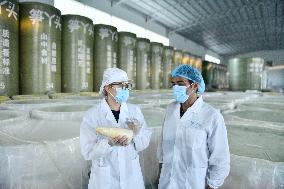
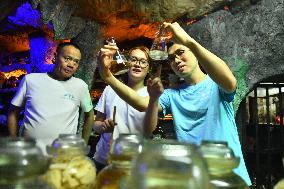
(240725) -- LIUZHOU, July 25, 2024 Photo by Xinhua/ABACAPRESS.COM) -- Yan Qianqian (2nd, R) and her father Yan Jiantiao (1st, R) check the ferment situation of pickled bamboo shoots with Dr. Yu Wanguo (1st, L) from College of Biological and Chemical Engineering under Guangxi University of Science and Technology, in Liuzhou, south China's Guangxi Zhuang Autonomous Region, July 24, 2024. After working at an airport for 5 years, Yan Qianqian decided to quit the job and start her own business in her hometown in 2021. Yan Qianqian, now 29, and her father Yan Jiantiao founded an agriculture company focusing on producing pickled bamboo shoots, which is an important ingredient for the popular Luosifen rice noodles. For years, she has been working with experts from local universities to improve the traditional making methods of the pickled bamboo shoots with modern technologies, trying to gain more favor from the young generation. Photo by Xinhua/ABACAPRESS.COM/Huang Xiaobang)

  •  
CHINA-GUANGXI-LIUZHOU-PICKLED BAMBOO SHOOTS-YOUNG ENTREPRENEUR (CN)

CHINA-GUANGXI-LIUZHOU-PICKLED BAMBOO SHOOTS-YOUNG ENTREPRENEUR (CN)

(240725) -- LIUZHOU, July 25, 2024 Photo by Xinhua/ABACAPRESS.COM) -- An aerial drone photo taken on July 23, 2024 shows Yan Qianqian driving a car to harvest bamboo shoots at a planting base in Liuzhou, south China's Guangxi Zhuang Autonomous Region. After working at an airport for 5 years, Yan Qianqian decided to quit the job and start her own business in her hometown in 2021. Yan Qianqian, now 29, and her father Yan Jiantiao founded an agriculture company focusing on producing pickled bamboo shoots, which is an important ingredient for the popular Luosifen rice noodles. For years, she has been working with experts from local universities to improve the traditional making methods of the pickled bamboo shoots with modern technologies, trying to gain more favor from the young generation. Photo by Xinhua/ABACAPRESS.COM/Huang Xiaobang)

  •  
CHINA-GUANGXI-LIUZHOU-PICKLED BAMBOO SHOOTS-YOUNG ENTREPRENEUR (CN)

CHINA-GUANGXI-LIUZHOU-PICKLED BAMBOO SHOOTS-YOUNG ENTREPRENEUR (CN)

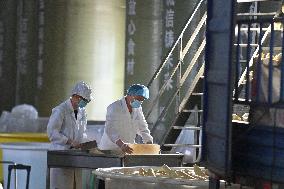
(240725) -- LIUZHOU, July 25, 2024 Photo by Xinhua/ABACAPRESS.COM) -- Yan Qianqian (C) processes bamboo shoots at a production line of a pickled bamboo shoots processing plant in Liuzhou, south China's Guangxi Zhuang Autonomous Region, July 23, 2024. After working at an airport for 5 years, Yan Qianqian decided to quit the job and start her own business in her hometown in 2021. Yan Qianqian, now 29, and her father Yan Jiantiao founded an agriculture company focusing on producing pickled bamboo shoots, which is an important ingredient for the popular Luosifen rice noodles. For years, she has been working with experts from local universities to improve the traditional making methods of the pickled bamboo shoots with modern technologies, trying to gain more favor from the young generation. Photo by Xinhua/ABACAPRESS.COM/Huang Xiaobang)

  •  
CHINA-GUANGXI-LIUZHOU-PICKLED BAMBOO SHOOTS-YOUNG ENTREPRENEUR (CN)

CHINA-GUANGXI-LIUZHOU-PICKLED BAMBOO SHOOTS-YOUNG ENTREPRENEUR (CN)

(240725) -- LIUZHOU, July 25, 2024 Photo by Xinhua/ABACAPRESS.COM) -- Yan Qianqian (L) gives instruction as a worker listens at a pickled bamboo shoots processing plant in Liuzhou, south China's Guangxi Zhuang Autonomous Region, July 23, 2024. After working at an airport for 5 years, Yan Qianqian decided to quit the job and start her own business in her hometown in 2021. Yan Qianqian, now 29, and her father Yan Jiantiao founded an agriculture company focusing on producing pickled bamboo shoots, which is an important ingredient for the popular Luosifen rice noodles. For years, she has been working with experts from local universities to improve the traditional making methods of the pickled bamboo shoots with modern technologies, trying to gain more favor from the young generation. Photo by Xinhua/ABACAPRESS.COM/Huang Xiaobang)

  •  
CHINA-GUANGXI-LIUZHOU-PICKLED BAMBOO SHOOTS-YOUNG ENTREPRENEUR (CN)

CHINA-GUANGXI-LIUZHOU-PICKLED BAMBOO SHOOTS-YOUNG ENTREPRENEUR (CN)

(240725) -- LIUZHOU, July 25, 2024 Photo by Xinhua/ABACAPRESS.COM) -- Yan Qianqian (L) and her father Yan Jiantiao process bamboo shoots at a production line of a pickled bamboo shoots processing plant in Liuzhou, south China's Guangxi Zhuang Autonomous Region, July 23, 2024. After working at an airport for 5 years, Yan Qianqian decided to quit the job and start her own business in her hometown in 2021. Yan Qianqian, now 29, and her father Yan Jiantiao founded an agriculture company focusing on producing pickled bamboo shoots, which is an important ingredient for the popular Luosifen rice noodles. For years, she has been working with experts from local universities to improve the traditional making methods of the pickled bamboo shoots with modern technologies, trying to gain more favor from the young generation. Photo by Xinhua/ABACAPRESS.COM/Huang Xiaobang)

  •  
CHINA-GUANGXI-LIUZHOU-PICKLED BAMBOO SHOOTS-YOUNG ENTREPRENEUR (CN)

CHINA-GUANGXI-LIUZHOU-PICKLED BAMBOO SHOOTS-YOUNG ENTREPRENEUR (CN)

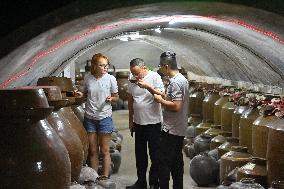
(240725) -- LIUZHOU, July 25, 2024 Photo by Xinhua/ABACAPRESS.COM) -- Yan Qianqian (L) and her father Yan Jiantiao (C) inspect the ferment situation of pickled bamboo shoots with Dr. Yu Wanguo from College of Biological and Chemical Engineering under Guangxi University of Science and Technology, in Liuzhou, south China's Guangxi Zhuang Autonomous Region, July 24, 2024. After working at an airport for 5 years, Yan Qianqian decided to quit the job and start her own business in her hometown in 2021. Yan Qianqian, now 29, and her father Yan Jiantiao founded an agriculture company focusing on producing pickled bamboo shoots, which is an important ingredient for the popular Luosifen rice noodles. For years, she has been working with experts from local universities to improve the traditional making methods of the pickled bamboo shoots with modern technologies, trying to gain more favor from the young generation. Photo by Xinhua/ABACAPRESS.COM/Huang Xiaobang)

  •  
CHINA-GUANGXI-LIUZHOU-PICKLED BAMBOO SHOOTS-YOUNG ENTREPRENEUR (CN)

CHINA-GUANGXI-LIUZHOU-PICKLED BAMBOO SHOOTS-YOUNG ENTREPRENEUR (CN)

(240725) -- LIUZHOU, July 25, 2024 Photo by Xinhua/ABACAPRESS.COM) -- Yan Qianqian (L) and her father Yan Jiantiao visit a restaurant for survey of pickled bamboo shoots in Liuzhou, south China's Guangxi Zhuang Autonomous Region, July 23, 2024. After working at an airport for 5 years, Yan Qianqian decided to quit the job and start her own business in her hometown in 2021. Yan Qianqian, now 29, and her father Yan Jiantiao founded an agriculture company focusing on producing pickled bamboo shoots, which is an important ingredient for the popular Luosifen rice noodles. For years, she has been working with experts from local universities to improve the traditional making methods of the pickled bamboo shoots with modern technologies, trying to gain more favor from the young generation. Photo by Xinhua/ABACAPRESS.COM/Huang Xiaobang)

  •  
CHINA-GUANGXI-LIUZHOU-PICKLED BAMBOO SHOOTS-YOUNG ENTREPRENEUR (CN)

CHINA-GUANGXI-LIUZHOU-PICKLED BAMBOO SHOOTS-YOUNG ENTREPRENEUR (CN)

(240725) -- LIUZHOU, July 25, 2024 Photo by Xinhua/ABACAPRESS.COM) -- Yan Qianqian (L) and her father Yan Jiantiao carry bamboo shoots at a planting base in Liuzhou, south China's Guangxi Zhuang Autonomous Region, July 23, 2024. After working at an airport for 5 years, Yan Qianqian decided to quit the job and start her own business in her hometown in 2021. Yan Qianqian, now 29, and her father Yan Jiantiao founded an agriculture company focusing on producing pickled bamboo shoots, which is an important ingredient for the popular Luosifen rice noodles. For years, she has been working with experts from local universities to improve the traditional making methods of the pickled bamboo shoots with modern technologies, trying to gain more favor from the young generation. Photo by Xinhua/ABACAPRESS.COM/Huang Xiaobang)

  •  
CHINA-GUANGXI-LIUZHOU-PICKLED BAMBOO SHOOTS-YOUNG ENTREPRENEUR (CN)

CHINA-GUANGXI-LIUZHOU-PICKLED BAMBOO SHOOTS-YOUNG ENTREPRENEUR (CN)

(240725) -- LIUZHOU, July 25, 2024 Photo by Xinhua/ABACAPRESS.COM) -- Yan Qianqian (2nd, R) and her father Yan Jiantiao (3rd, R) harvest bamboo shoots at a planting base in Liuzhou, south China's Guangxi Zhuang Autonomous Region, July 23, 2024. After working at an airport for 5 years, Yan Qianqian decided to quit the job and start her own business in her hometown in 2021. Yan Qianqian, now 29, and her father Yan Jiantiao founded an agriculture company focusing on producing pickled bamboo shoots, which is an important ingredient for the popular Luosifen rice noodles. For years, she has been working with experts from local universities to improve the traditional making methods of the pickled bamboo shoots with modern technologies, trying to gain more favor from the young generation. Photo by Xinhua/ABACAPRESS.COM/Huang Xiaobang)

  •  
CHINA-GUANGXI-LIUZHOU-PICKLED BAMBOO SHOOTS-YOUNG ENTREPRENEUR (CN)

CHINA-GUANGXI-LIUZHOU-PICKLED BAMBOO SHOOTS-YOUNG ENTREPRENEUR (CN)

(240725) -- LIUZHOU, July 25, 2024 Photo by Xinhua/ABACAPRESS.COM) -- Yan Qianqian (C) and her father Yan Jiantiao (L) observe the ferment situation of pickled bamboo shoots with Dr. Yu Wanguo from College of Biological and Chemical Engineering under Guangxi University of Science and Technology, in Liuzhou, south China's Guangxi Zhuang Autonomous Region, July 24, 2024. After working at an airport for 5 years, Yan Qianqian decided to quit the job and start her own business in her hometown in 2021. Yan Qianqian, now 29, and her father Yan Jiantiao founded an agriculture company focusing on producing pickled bamboo shoots, which is an important ingredient for the popular Luosifen rice noodles. For years, she has been working with experts from local universities to improve the traditional making methods of the pickled bamboo shoots with modern technologies, trying to gain more favor from the young generation. Photo by Xinhua/ABACAPRESS.COM/Huang Xiaobang)

  •  
CHINA-GUANGXI-LIUZHOU-PICKLED BAMBOO SHOOTS-YOUNG ENTREPRENEUR (CN)

CHINA-GUANGXI-LIUZHOU-PICKLED BAMBOO SHOOTS-YOUNG ENTREPRENEUR (CN)

(240725) -- LIUZHOU, July 25, 2024 Photo by Xinhua/ABACAPRESS.COM) -- Yan Qianqian takes a rest in her office in Liuzhou, south China's Guangxi Zhuang Autonomous Region, July 24, 2024. After working at an airport for 5 years, Yan Qianqian decided to quit the job and start her own business in her hometown in 2021. Yan Qianqian, now 29, and her father Yan Jiantiao founded an agriculture company focusing on producing pickled bamboo shoots, which is an important ingredient for the popular Luosifen rice noodles. For years, she has been working with experts from local universities to improve the traditional making methods of the pickled bamboo shoots with modern technologies, trying to gain more favor from the young generation. Photo by Xinhua/ABACAPRESS.COM/Huang Xiaobang)

  •  
CHINA-GUANGXI-LIUZHOU-PICKLED BAMBOO SHOOTS-YOUNG ENTREPRENEUR (CN)

CHINA-GUANGXI-LIUZHOU-PICKLED BAMBOO SHOOTS-YOUNG ENTREPRENEUR (CN)

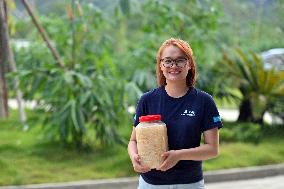
(240725) -- LIUZHOU, July 25, 2024 Photo by Xinhua/ABACAPRESS.COM) -- Yan Qianqian displays a bottle of pickled bamboo shoots produced by her company in Liuzhou, south China's Guangxi Zhuang Autonomous Region, July 23, 2024. After working at an airport for 5 years, Yan Qianqian decided to quit the job and start her own business in her hometown in 2021. Yan Qianqian, now 29, and her father Yan Jiantiao founded an agriculture company focusing on producing pickled bamboo shoots, which is an important ingredient for the popular Luosifen rice noodles. For years, she has been working with experts from local universities to improve the traditional making methods of the pickled bamboo shoots with modern technologies, trying to gain more favor from the young generation. Photo by Xinhua/ABACAPRESS.COM/Huang Xiaobang)

  •  
CHINA-GUANGXI-LIUZHOU-PICKLED BAMBOO SHOOTS-YOUNG ENTREPRENEUR (CN)

CHINA-GUANGXI-LIUZHOU-PICKLED BAMBOO SHOOTS-YOUNG ENTREPRENEUR (CN)

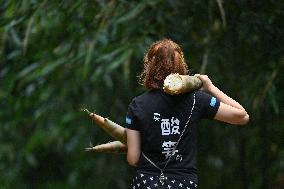
(240725) -- LIUZHOU, July 25, 2024 Photo by Xinhua/ABACAPRESS.COM) -- Yan Qianqian carries bamboo shoots at a planting base in Liuzhou, south China's Guangxi Zhuang Autonomous Region, July 23, 2024. After working at an airport for 5 years, Yan Qianqian decided to quit the job and start her own business in her hometown in 2021. Yan Qianqian, now 29, and her father Yan Jiantiao founded an agriculture company focusing on producing pickled bamboo shoots, which is an important ingredient for the popular Luosifen rice noodles. For years, she has been working with experts from local universities to improve the traditional making methods of the pickled bamboo shoots with modern technologies, trying to gain more favor from the young generation. Photo by Xinhua/ABACAPRESS.COM/Huang Xiaobang)

  •  
CHINA-GUANGXI-LIUZHOU-PICKLED BAMBOO SHOOTS-YOUNG ENTREPRENEUR (CN)

CHINA-GUANGXI-LIUZHOU-PICKLED BAMBOO SHOOTS-YOUNG ENTREPRENEUR (CN)

(240725) -- LIUZHOU, July 25, 2024 Photo by Xinhua/ABACAPRESS.COM) -- An aerial drone photo taken on July 24, 2024 shows an exterior view of a pickled bamboo shoots processing plant founded by Yan Qianqian in Liuzhou, south China's Guangxi Zhuang Autonomous Region. After working at an airport for 5 years, Yan Qianqian decided to quit the job and start her own business in her hometown in 2021. Yan Qianqian, now 29, and her father Yan Jiantiao founded an agriculture company focusing on producing pickled bamboo shoots, which is an important ingredient for the popular Luosifen rice noodles. For years, she has been working with experts from local universities to improve the traditional making methods of the pickled bamboo shoots with modern technologies, trying to gain more favor from the young generation. Photo by Xinhua/ABACAPRESS.COM/Huang Xiaobang)

  •  

Xizang in Archives | The history teller

STORY: Xizang in Archives | The history teller SHOOTING TIME: May 14, 2024 DATELINE: June 12, 2024 LENGTH: 00:01:23 LOCATION: LHASA, China CATEGORY: CULTURE SHOTLIST: 1. various of the Archives of Xizang Autonomous Region 2. various of Yuan Jiarui 3. SOUNDBITE (Chinese): YUAN JIARUI, Docent of the Archives of Xizang Autonomous Region STORYLINE: After finishing graduate studies, Yuan Jiarui came to work at the Archives of the Xizang Autonomous Region in Lhasa. As a docent, Jiarui has been deeply impressed by the cultural exchanges between Tibetans and other ethnic groups in China. SOUNDBITE (Chinese): YUAN JIARUI, Docent of the Archives of Xizang Autonomous Region "The Tibetan medical thangka painting has impressed me. There are four diagnostic methods known as 'inspection, auscultation & olfaction, inquiry, and palpation' in traditional Chinese medicine. I have learned that Tibetan medicine also has three diagnostic methods 'inspection, palpation, and inquiry' and presents various symptoms in the form

  •  
ChineseToday | Tea mixologist brings Huangshan tea culture in vogue

ChineseToday | Tea mixologist brings Huangshan tea culture in vogue

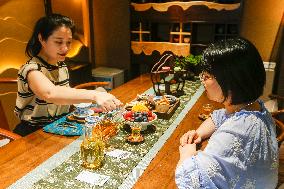
(240602) -- HUANGSHAN, June 2, 2024 (Xinhua) -- Customers drink tea beverages at a shop in Huangshan City, east China's Anhui Province, May 23, 2024. Wang Sun is the founder of Demingshe, a tea art vocational training school in Huangshan City. Huangshan City is the place of origin of several famous teas including Huangshan Maofeng, Taiping Houkui and Keemun black tea, and boasts a long history of drinking tea. As a pioneer in developing innovative tea-making skills and alternative ways of drinking tea, Wang started the research and promotion of the new-style tea beverages in 2021. Inspired by bartenders, she uses traditional Huangshan teas as base, employing bar tools to blend the tea with fresh fruits, herbal medicines, fermented rice wine, or ice cubes, creating beverages with diverse flavours, mouthfeels, and appearances. The tea beverages hit the market and were well received by consumers, meeting their preferences of tea drinking that were dissimilar from traditional brewing methods. "Young peop

  • Main
  • Top
  • Editorial
  • Creative
  • About Us
  • About ILG
  • Terms of use
  • Company
  • BEHIND
  • Price List
  • Single Plan
  • Monthly Plan
  • Services
  • Shooting
  • Rights Clearance
  • Support
  • FAQ
  • How To Buy
  • Contact Us
  • Become a Partner

© KYODO NEWS IMAGES INC

All Rights Reserved.

  • Editorial
  • Olympics
  • News
  • Sports
  • Japan
  • Tech
  • Royal
  • Disaster
  • NorthKorea
  • Old Japan
  • SNS

  • Creative
  • Food
  • Japan
  • Landscape
  • Animal
  • Popular
  • #Ukraine
  • #Russia
  • #coronavirus
  • #N. Korea
  • #China
  • #Thailand
  • #Ukraine
  • #Russia
  • #coronavirus
  • #N. Korea
  • #China
  • #Thailand
  • Food
  • Japan
  • Landscape
  • Animal
  • Olympics
  • News
  • Sports
  • Japan
  • Tech
  • Royal
  • Disaster
  • NorthKorea
  • Old Japan
  • SNS